


Black Kubeyra Handicraft
14 inch/ 36 cm Guru Padmasambhava
14 inch/ 36 cm Guru Padmasambhava
Couldn't load pickup availability
This statue depicts Guru Padmasambhava, the enlightened master who established Vajrayana in Tibet. He embodies transformative wisdom and the subjugation of obstacles.
At Arhatrupa, we take great care to ensure that each statue follows established iconographic forms and is crafted with respect for lineage-based symbolism.
Our intention is to offer works that may serve as visual references within ritual, contemplative, or devotional contexts, according to the practitioner’s own tradition and understanding.
This statue is handcrafted in Nepal using time-honored metal-casting traditions.
Artisans begin by sculpting a detailed wax model, which is encased in layers of clay and fired to create a mold.
Molten copper is then poured into the mold, and once cooled, the statue is carefully cleaned, hand-carved, and refined, reflecting craftsmanship passed down through generations of artisans.
A consecration service is available upon request and is performed by experienced Buddhist practitioners using traditional ritual methods.
Dimensions
Dimensions
x x
Materials
Materials
Shipping & Returns
Shipping & Returns
Delivery
We are pleased to offer free shipping on all orders. Based on availability, with assurance of a dependable service, we utilize UPS, DHL or FedEx for our standard courier deliveries, which generally arrive within 6-12 business days. Please rest assured that all items are fully insured during transit, providing you with reassurance throughout the process.
Return Policy
We kindly accept returns within 14 business days, and we encourage you to explore our Returns page or reach out to our customer service team for assistance in navigating this process. Your satisfaction is very important to us, and we are committed to ensuring a positive experience for you.
Care Instructions
Care Instructions
Use a clean, dry brush: Maintain the pristine condition of your item by strictly using a clean, dry brush for dust removal. This is especially important for painted surfaces, such as gold accents.
Avoid touching with wet, sweaty, or dirty hands: Preserve the optimal appearance of your piece by never touching painted surfaces with wet, sweaty, or dirty hands.
Spot Cleaning Tips: For any spots, use a clean eraser and apply it gently. However, success is not guaranteed, so prevention is crucial to avoid stains on painted surfaces.
Not recommended for outdoor display: To ensure longevity, keep your piece indoors and do not display it outdoors. This will help preserve its quality and appearance for lasting beauty.
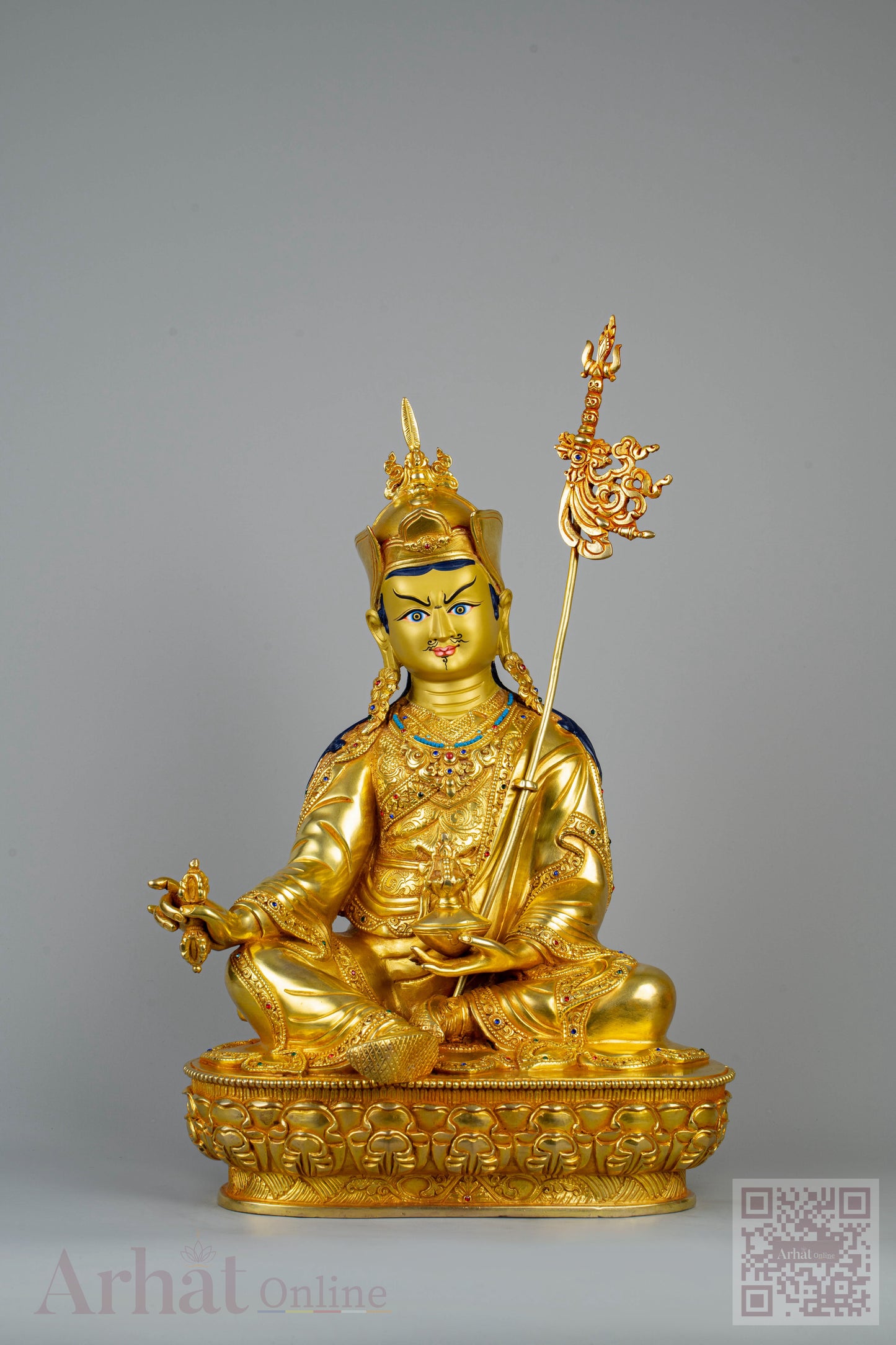
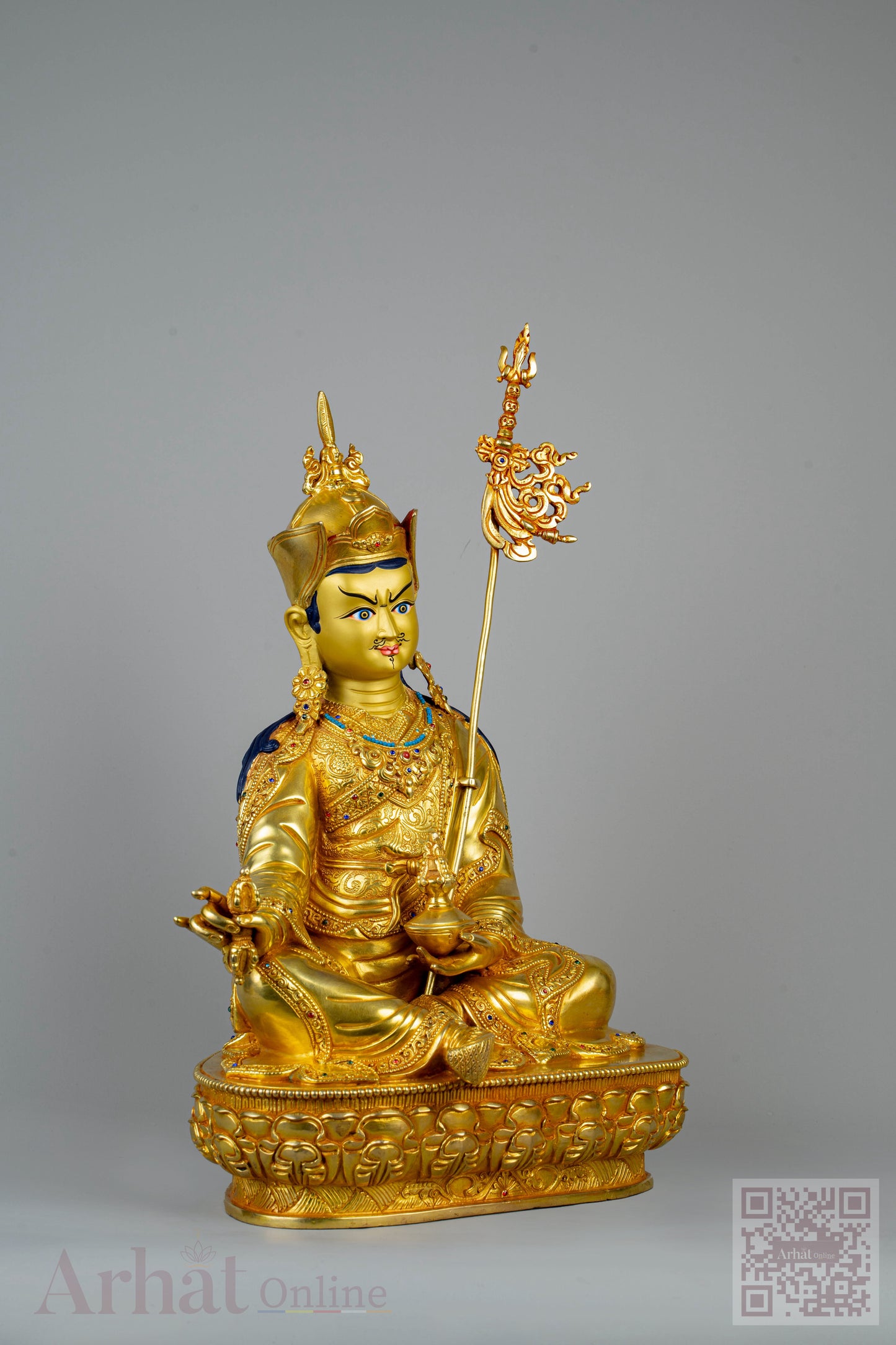

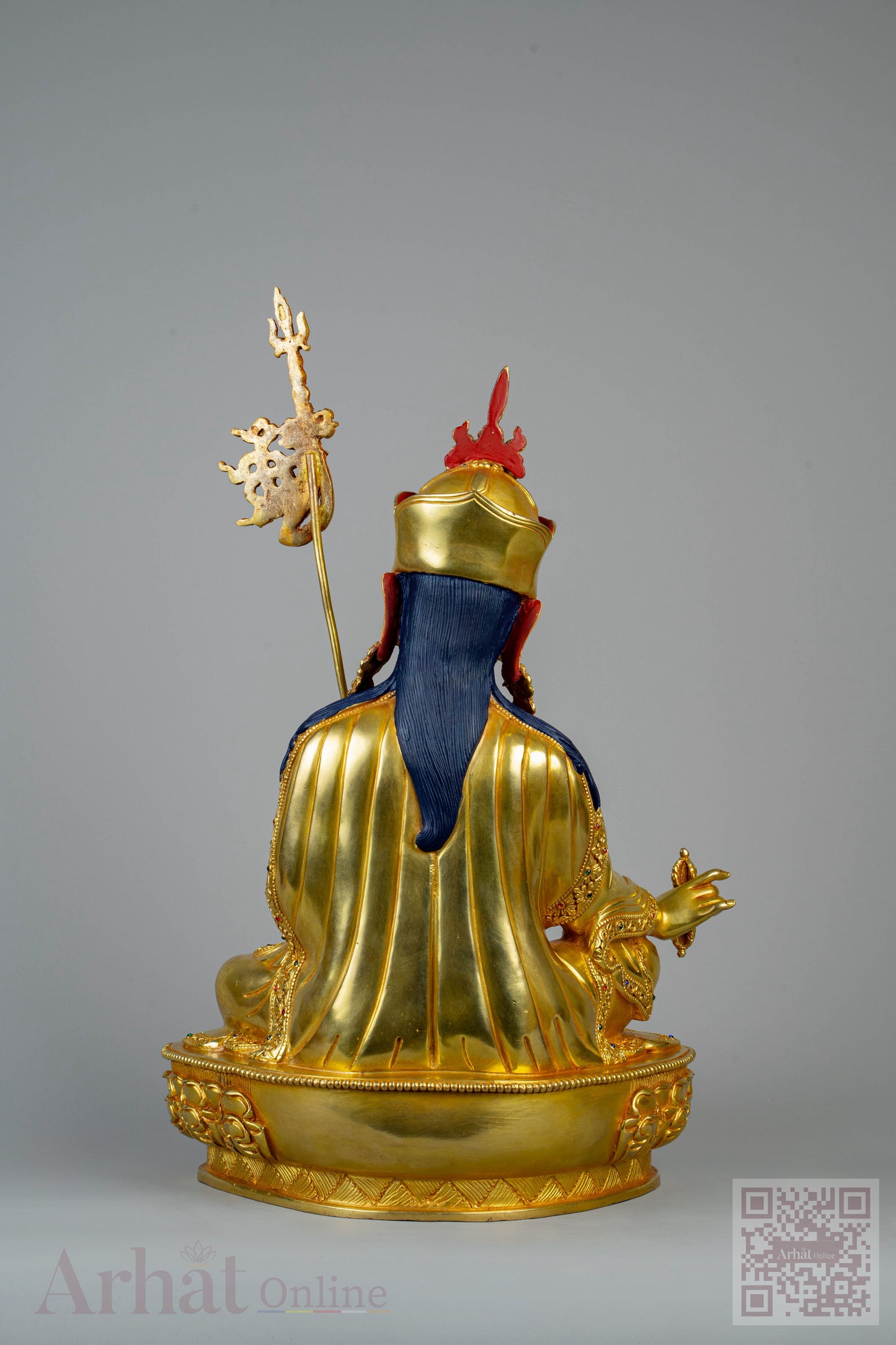
Guru Padmasambhava
Revered as the Second Buddha in Tibetan Buddhism, Padmasambhava is also considered as a manifestation of Amitābha Buddha, the Buddha of infinite Light, representing the enlightened power of speech. In the Tibetan Buddhism, enlightened beings are said to have three essential qualities – body, speech, and mind – and Padmasambhava is especially connected with the power of speech, helping to teach, guide, and awaken others through his words and blessings. Padmasambhava is said to have transform end the lives countless beings through the transmission of Vajrayāna teachings. Besides doctrinal transmission, he is also said to have subjugated local deities and spirits, transforming them into protectors of the Dharma, thus integrating indigenous beliefs within the Buddhist cosmological framework.
Padmashambhava played a central role in the construction and consecration of Samya Monastery, the first Buddhist monastery in Tibet when he was invited by King Trisong Detsen in the 8th century. Hence, he is celebrated as the one responsible for the transmission of Tantric Buddhism to Tibet and is credited with laying the foundations of Nyingma, the oldest of the four major schools of Tibetan Buddhism. According to historical and terma (treasure) accounts, he subdued malevolent spirits and local deities obstructing the establishment of the Dharma, converting them into Dharma protectors—a pivotal act that allowed Buddhism to take root in harmony with indigenous Tibetan beliefs.