


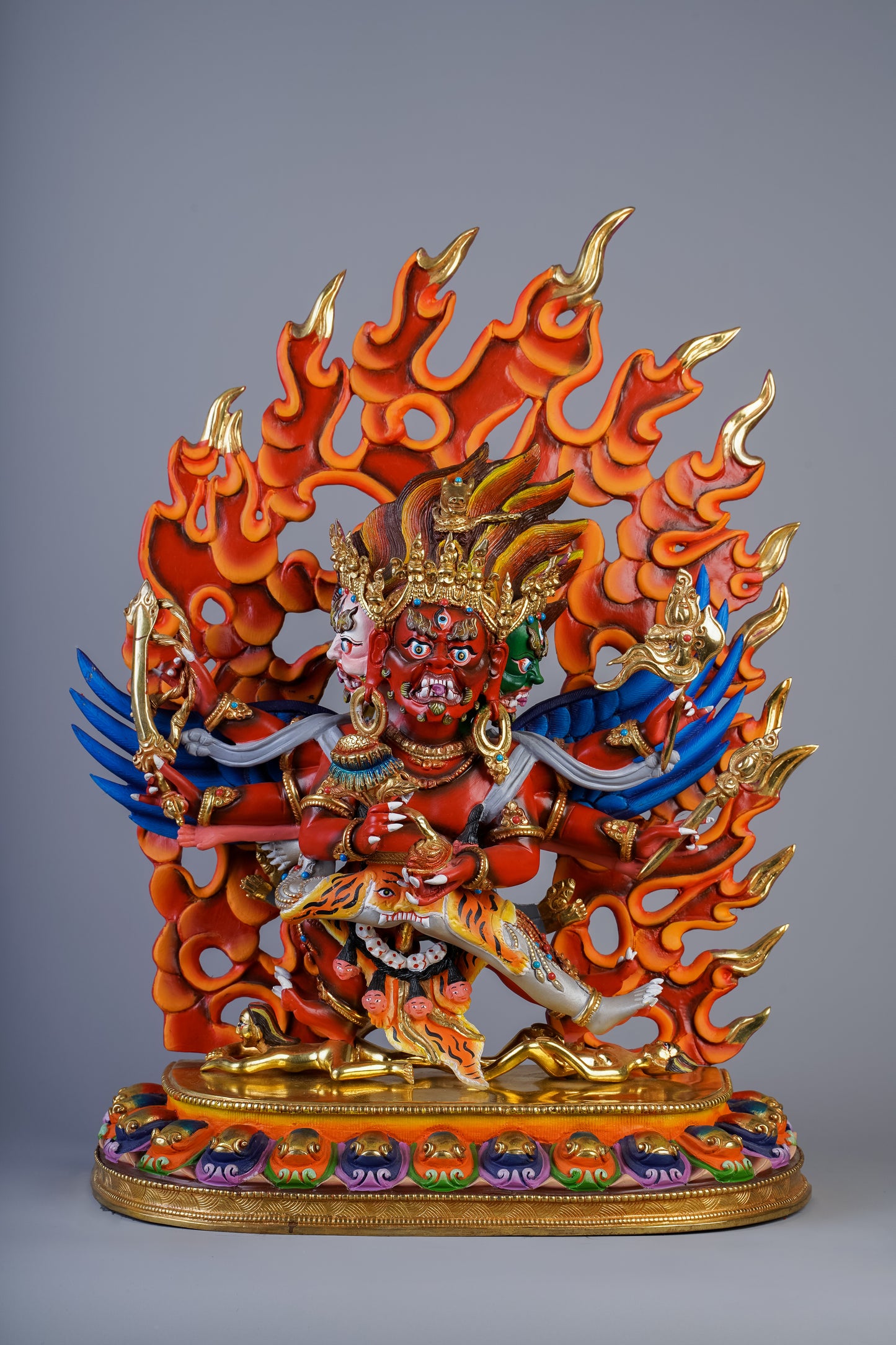
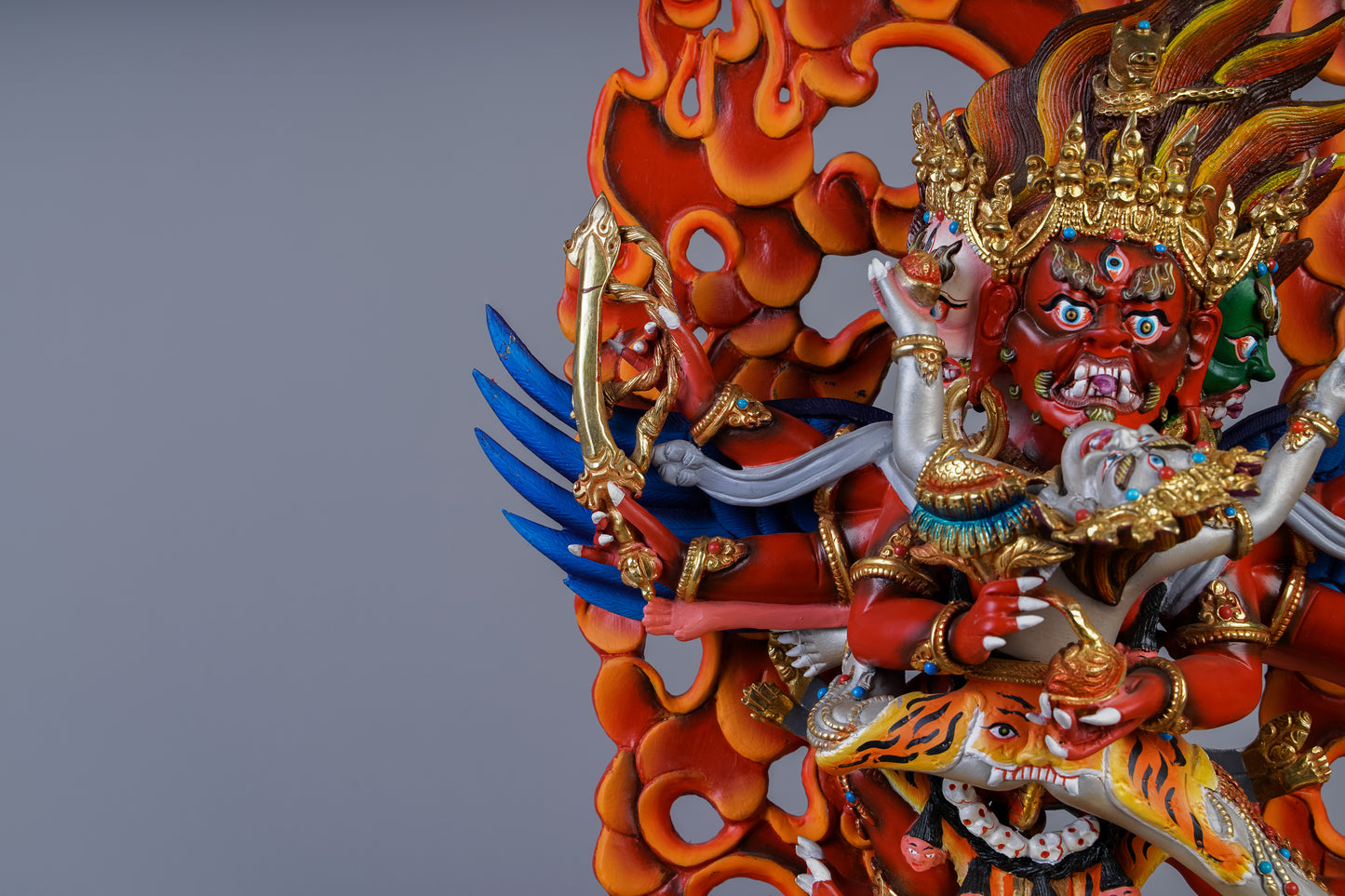
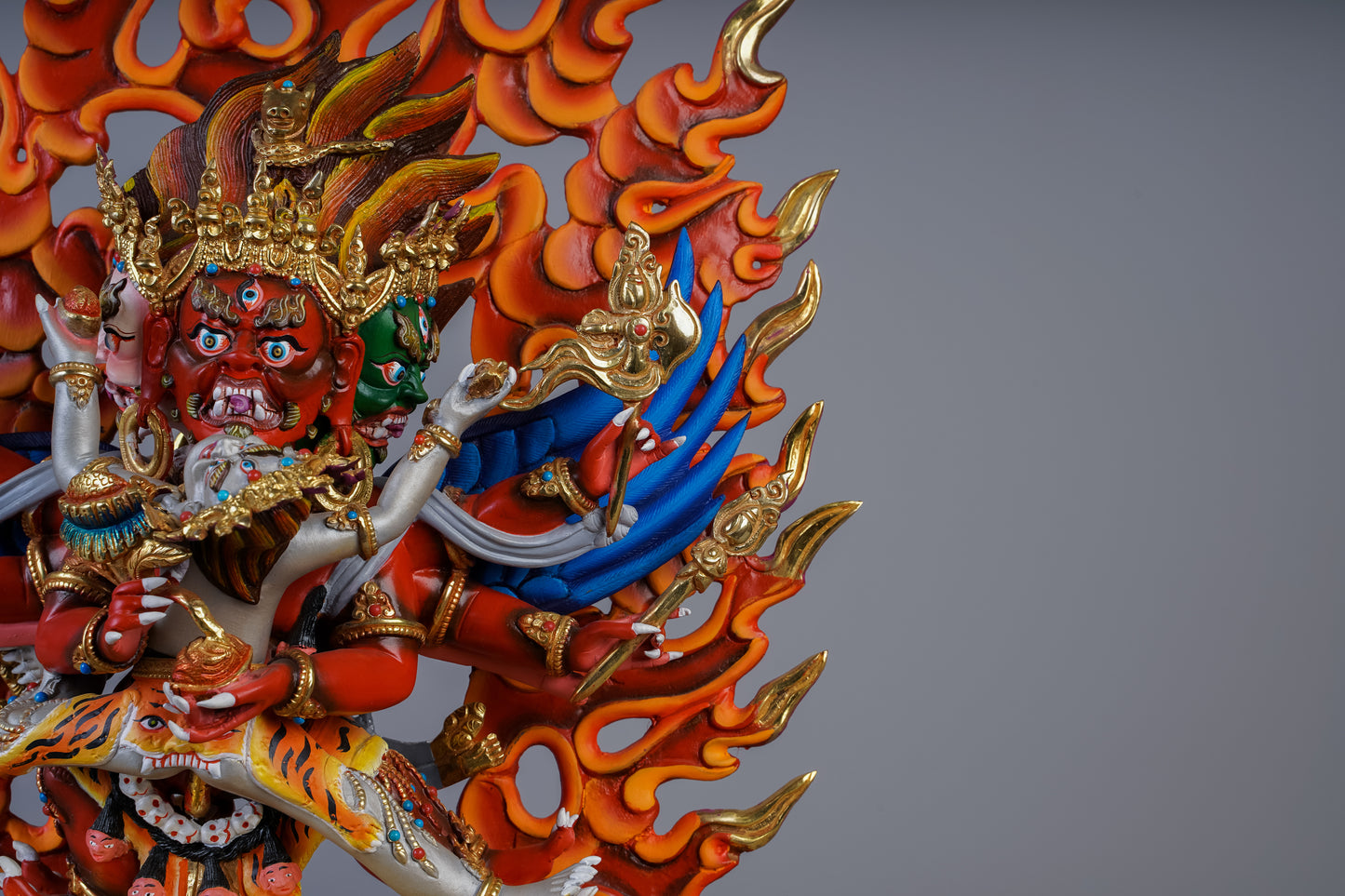
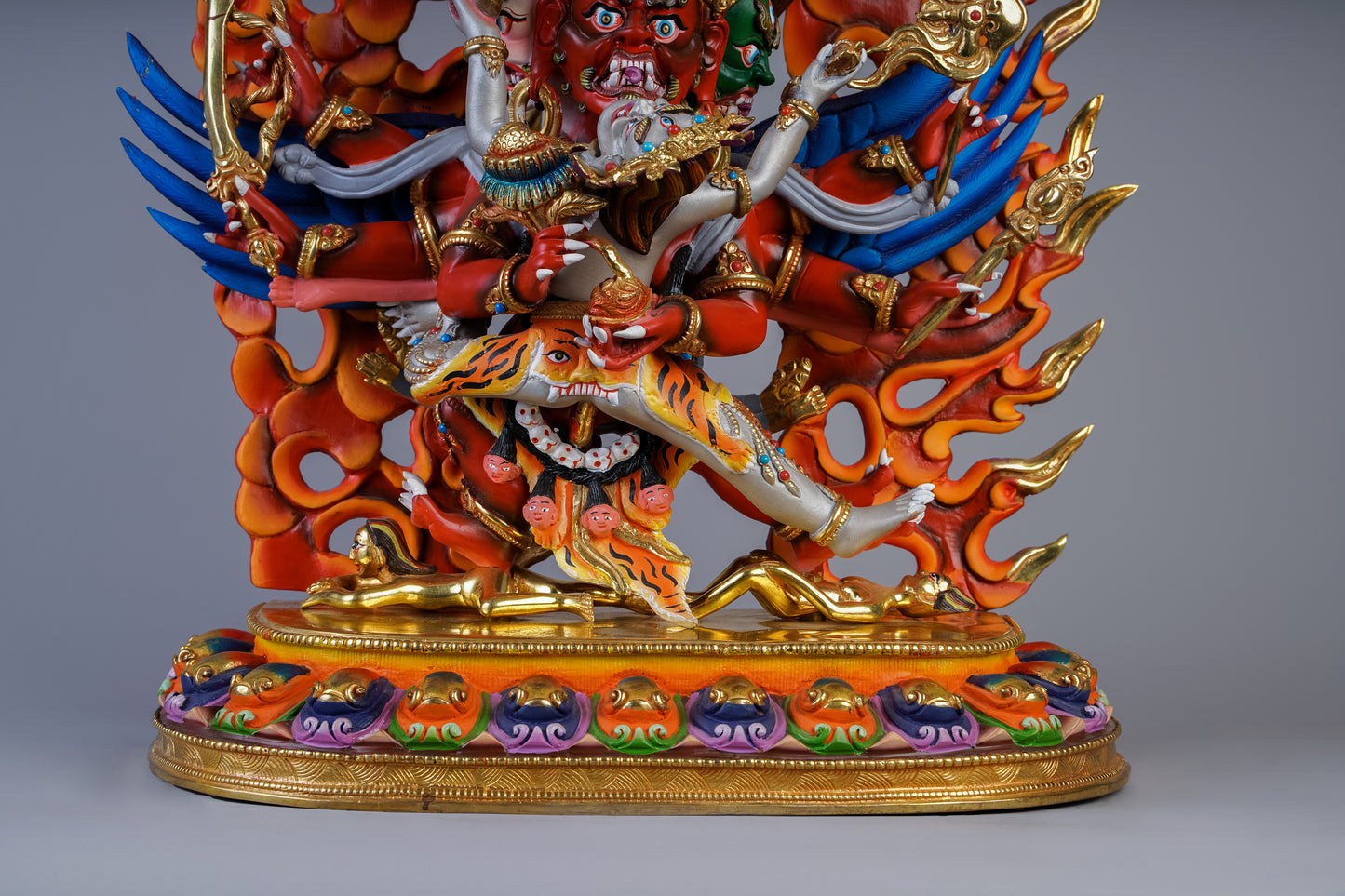
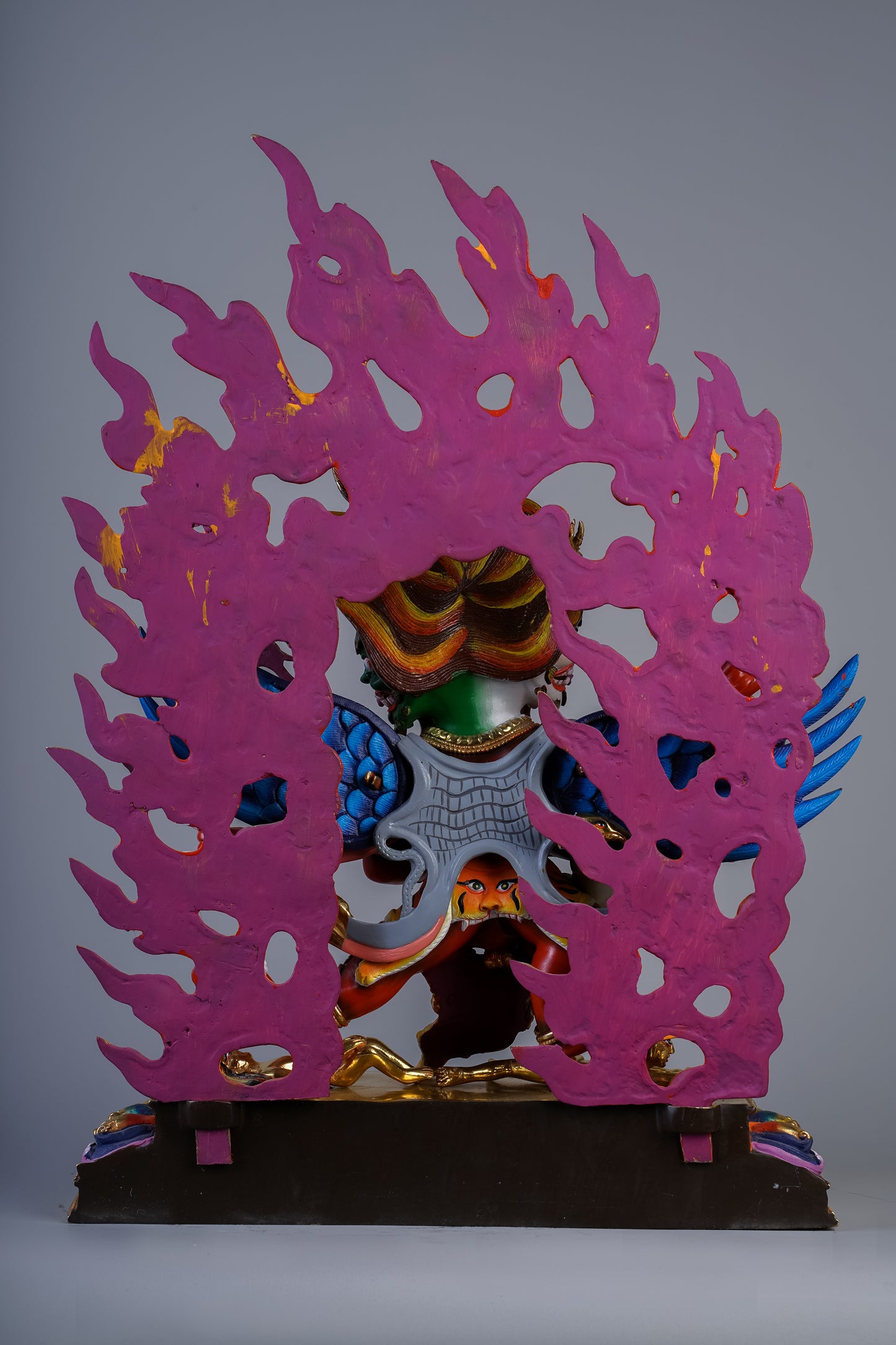
16 inch/ 41 cm Hayagriva
16 inch/ 41 cm Hayagriva
SKT. Hayagrīva(हयग्रीव) | TIB. rta mgrin(རྟ་མགྲིན) | CH. 馬頭明王 | VIET. Mã Đầu Minh Vương
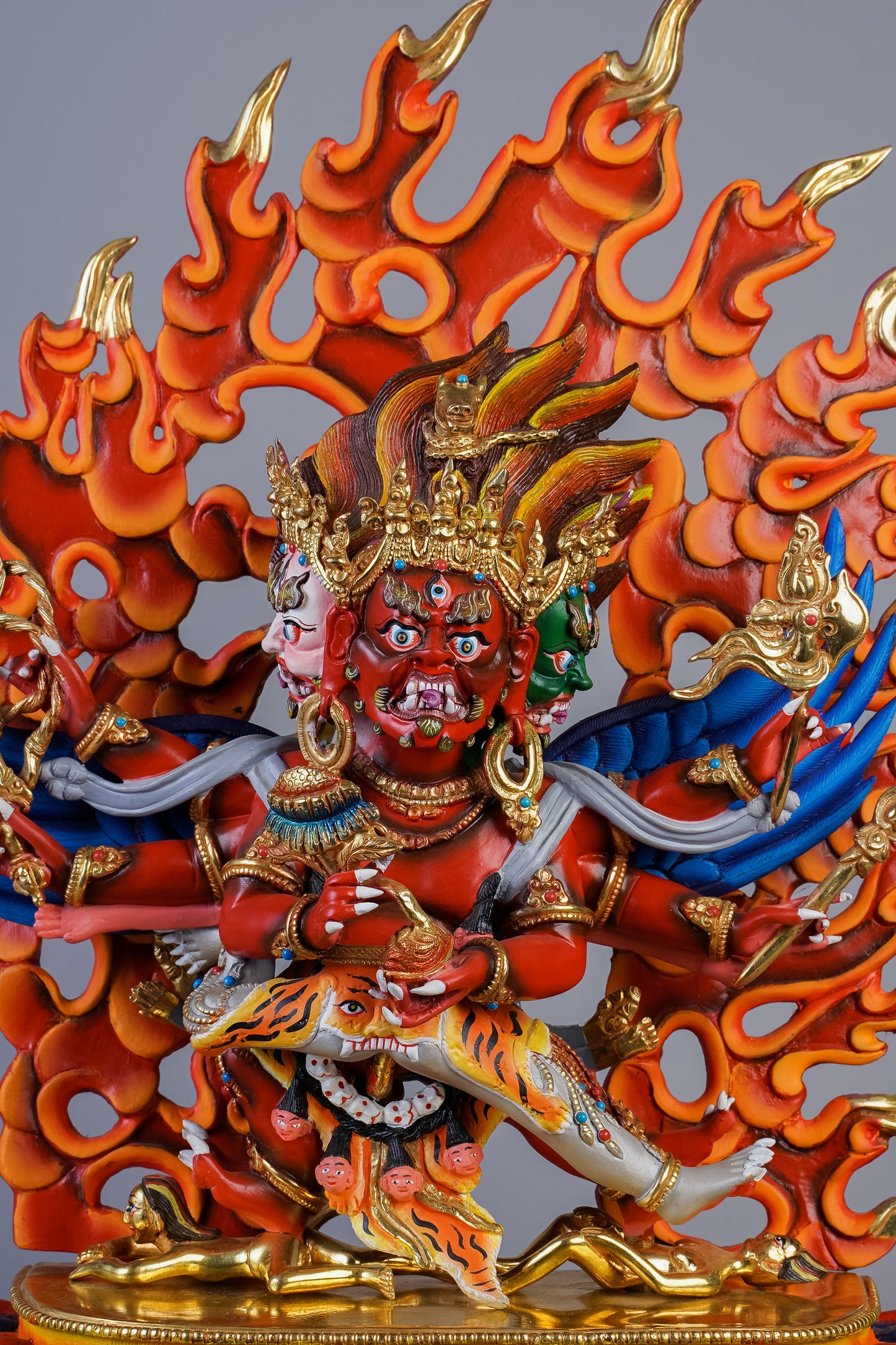
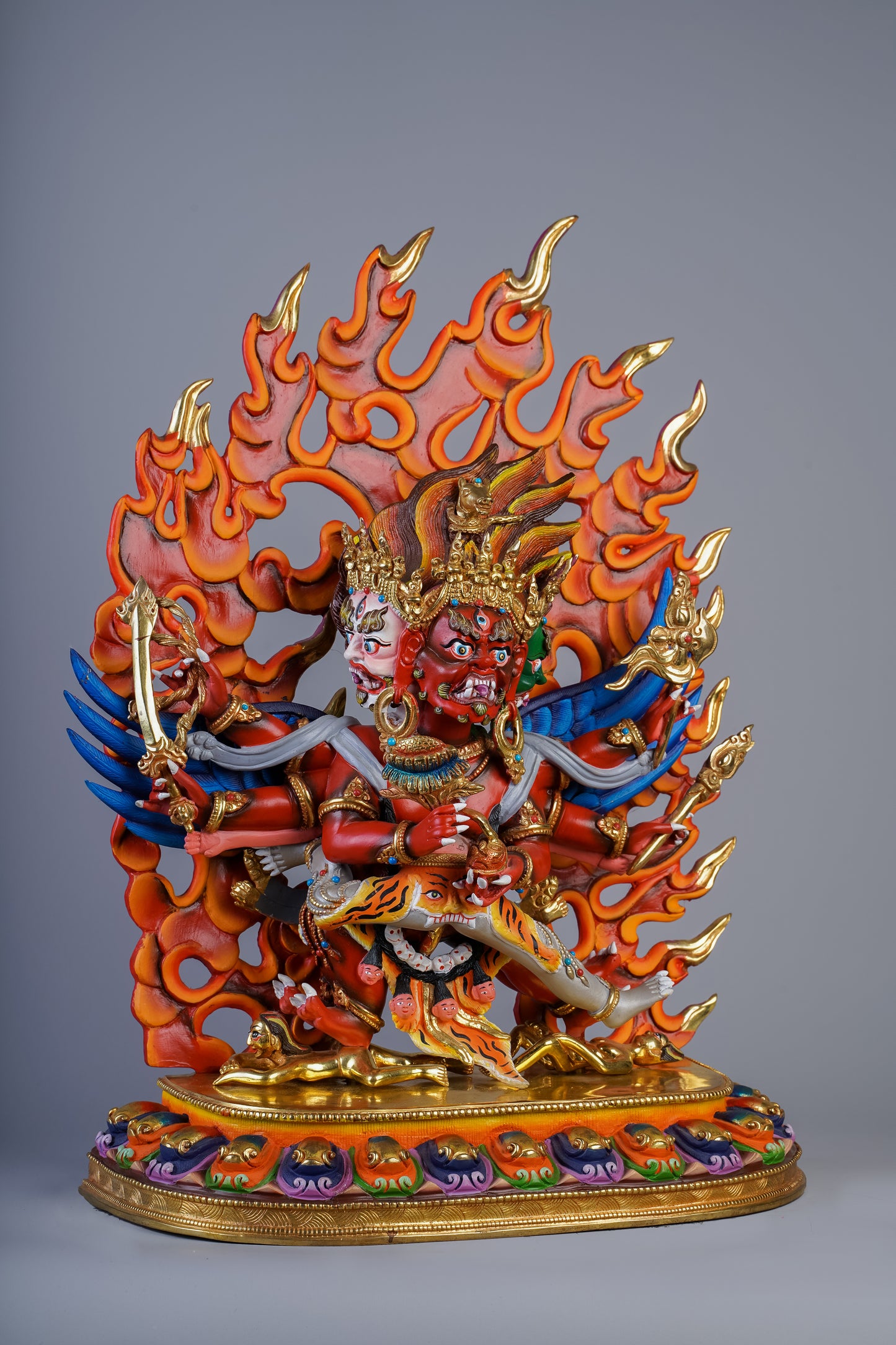
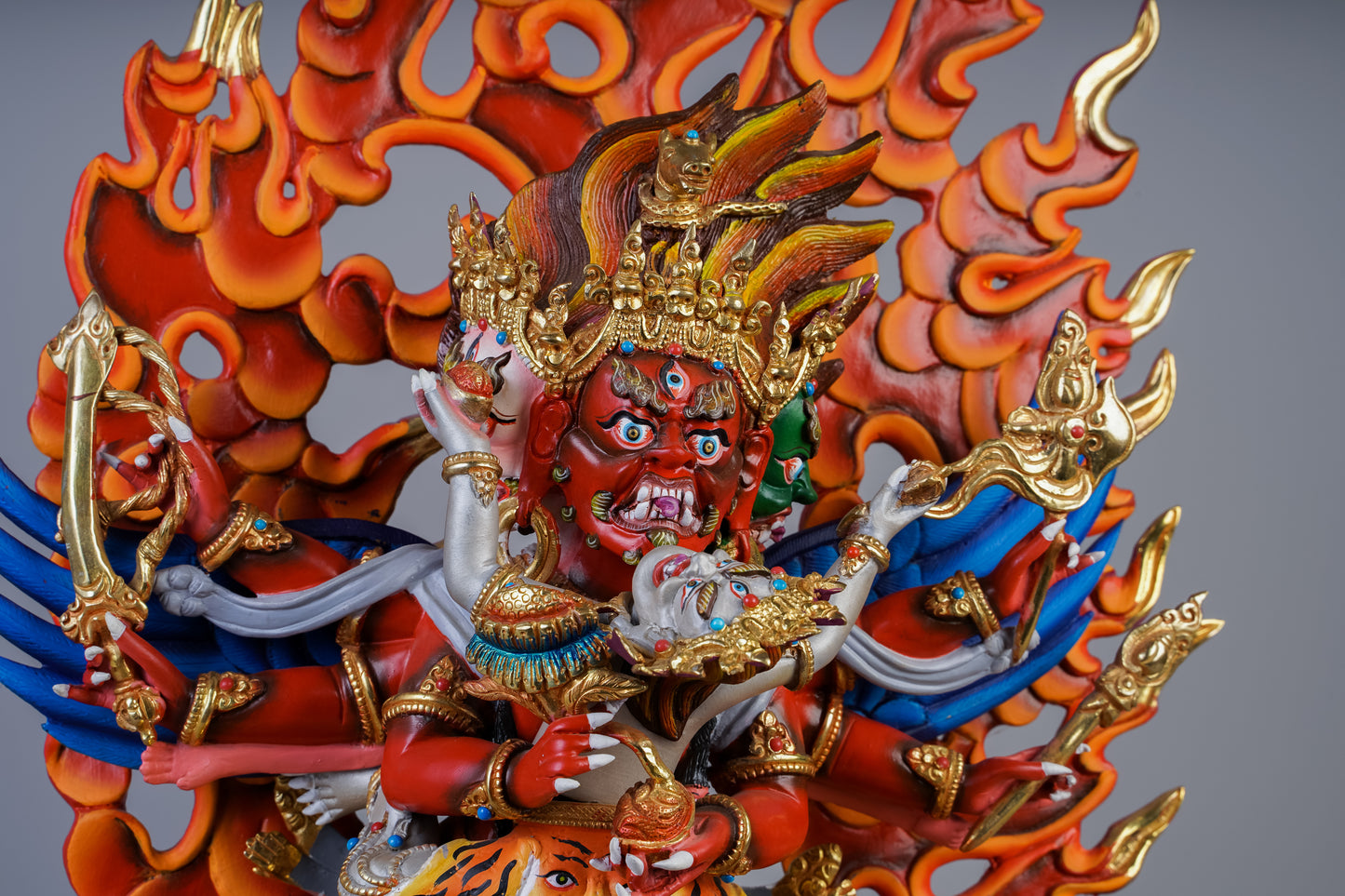
This statue depicts Hayagriva, the fierce expression that dispels obscurations. He embodies wrathful compassion that subdues negative forces and delusion.
- Height
- 41 cm 16.14 in
- Width
- 28 cm 11.02 in
- Depth
- 12 cm 4.72 in


Materials and Finish

Copper

Acrylic Color Painted

Gold Gilded
SKU:ARH155P1S
Shipping & Returns
Shipping & Returns
Delivery
Based on availability, with assurance of a dependable service, we utilize UPS, DHL or FedEx for our standard courier deliveries, which generally arrive within 6-12 business days. Please rest assured that all items are fully insured during transit, providing you with reassurance throughout the process.
Return Policy
We kindly accept returns within 14 business days, and we encourage you to explore our Returns page or reach out to our customer service team for assistance in navigating this process. Your satisfaction is very important to us, and we are committed to ensuring a positive experience for you.
Care Instructions
Care Instructions
Use a clean, dry brush: Maintain the pristine condition of your item by strictly using a clean, dry brush for dust removal. This is especially important for painted surfaces, such as gold accents.
Avoid touching with wet, sweaty, or dirty hands: Preserve the optimal appearance of your piece by never touching painted surfaces with wet, sweaty, or dirty hands.
Spot Cleaning Tips: For any spots, use a clean eraser and apply it gently. However, success is not guaranteed, so prevention is crucial to avoid stains on painted surfaces.
Not recommended for outdoor display: To ensure longevity, keep your piece indoors and do not display it outdoors. This will help preserve its quality and appearance for lasting beauty.
More Information
More Information
At Arhatrupa, we do our utmost to ensure that each statue follows established iconographic forms and is crafted with respect for lineage-based symbolism. If you notice any discrepancies, we kindly invite you to share your suggestions with us.
Our statues are handcrafted in Nepal using time-honored metal-casting traditions. Artisans begin by sculpting a detailed wax model, which is encased in layers of clay and fired to create a mold. Molten copper is then poured into the mold, and once cooled, the statue is carefully cleaned, hand-carved, and refined, reflecting craftsmanship passed down through generations of artisans.
A consecration service is available upon request and is performed by experienced Buddhist practitioners using traditional ritual methods.

About Hayagriva
Handmade statues of Hayagriva
-
16 inch/ 41 cm Hayagriva
Regular price $1,240.00Regular price
